The Small Business Credit Gap: A Barrier to Economic Mobility
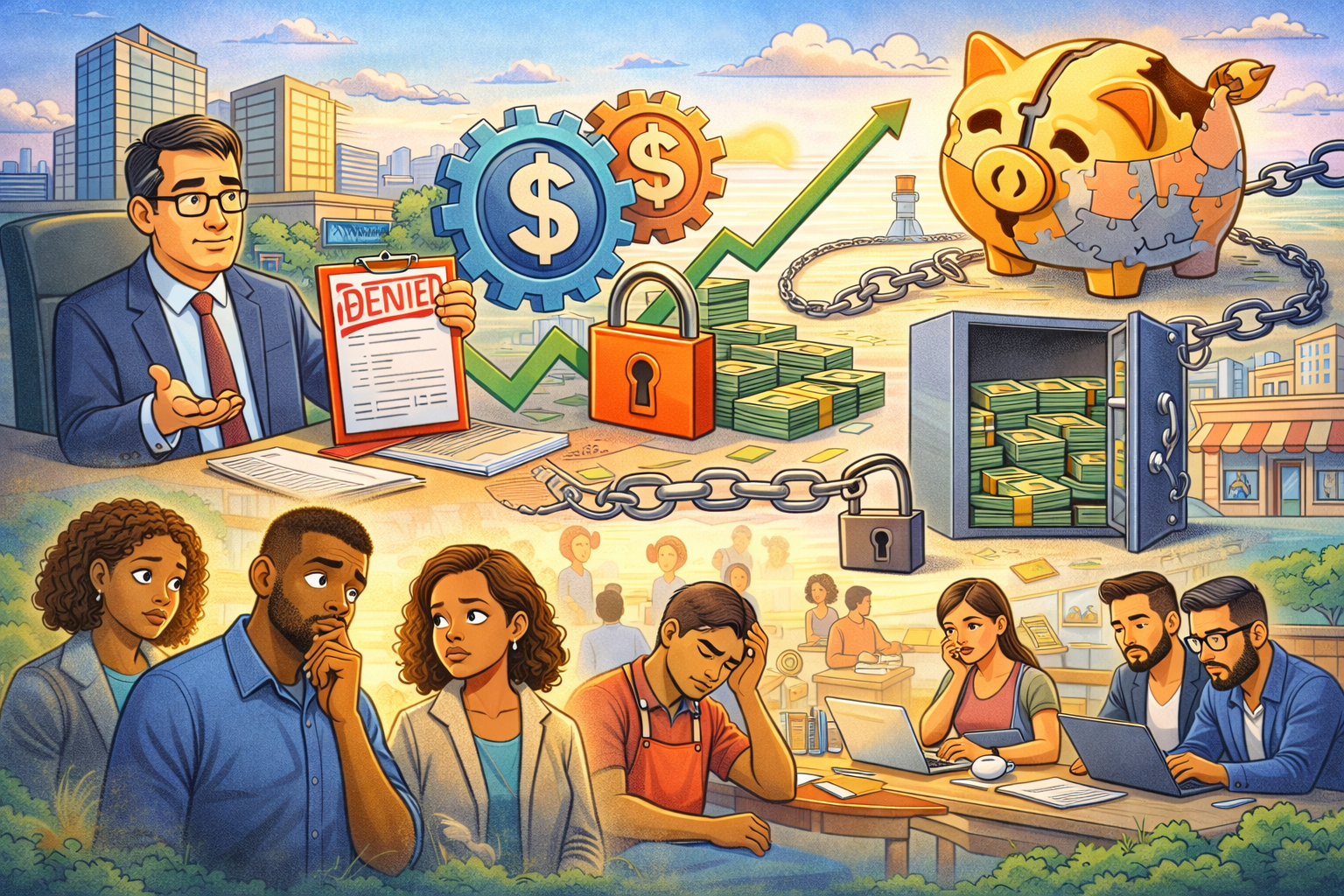
Philadelphia, Pa – Economic opportunity often begins with access to capital. For entrepreneurs trying to launch or expand a business, financing can determine whether an idea grows into a sustainable enterprise or remains unrealized.
Across the United States, many small business owners face significant barriers when seeking loans, investment, or other forms of financial support. These challenges are particularly severe for entrepreneurs in underserved communities.
The Capital Access Challenge
According to the Federal Reserve Small Business Credit Survey, only about 45% of small businesses that apply for financing receive the full amount they request. Many owners either receive partial funding or are denied entirely.
For entrepreneurs in underserved communities, the challenge is even greater. Research from the U.S. Small Business Administration (SBA) shows that minority-owned businesses are significantly more likely to be denied loans and are often approved for smaller loan amounts than their peers.
In many cases, entrepreneurs are forced to rely on personal savings, family support, or high-interest credit options to keep their businesses operating.
Why This Matters for Local Economies
Small businesses play a critical role in economic growth. According to the U.S. Small Business Administration, small businesses account for 99.9% of all businesses in the United States and employ nearly half of the American workforce.
When small businesses cannot access capital, the consequences extend beyond the entrepreneur. Hiring slows, expansion plans are delayed, and local economic growth weakens.
In underserved neighborhoods, this can mean fewer job opportunities, fewer locally owned businesses, and slower economic mobility.
The Role of Economic Support Systems
Capital alone is not always enough. Many entrepreneurs also need guidance on how to prepare for funding opportunities, develop strong business plans, and build operational systems that lenders and investors expect to see.
This is where structured economic support systems become essential.
Initiatives like Nour Navi focus on helping entrepreneurs strengthen their readiness for funding through mentorship, grant readiness support, business development training, and access to professional networks.
By helping entrepreneurs prepare for capital opportunities, these systems increase the likelihood that businesses can secure funding and grow sustainably.
Strengthening the Economic Ecosystem
Closing the small business credit gap requires more than financial resources. It requires coordinated support systems that connect entrepreneurs to mentorship, education, and strategic guidance.
When entrepreneurs have access to the tools they need, businesses grow stronger.
When businesses grow stronger, communities benefit through job creation, increased local investment, and greater economic stability.
Economic empowerment is not only about funding. It is about building the systems that allow entrepreneurs to thrive.
Sources
Federal Reserve Banks. Small Business Credit Survey.
https://www.fedsmallbusiness.org
U.S. Small Business Administration. Small Business Profile.
https://www.sba.gov
Brookings Institution. Financing Barriers for Minority-Owned Businesses.
https://www.brookings.edu
U.S. Department of Treasury. Access to Capital for Small Businesses.
https://home.treasury.gov
