AI and the Future of Small Businesses
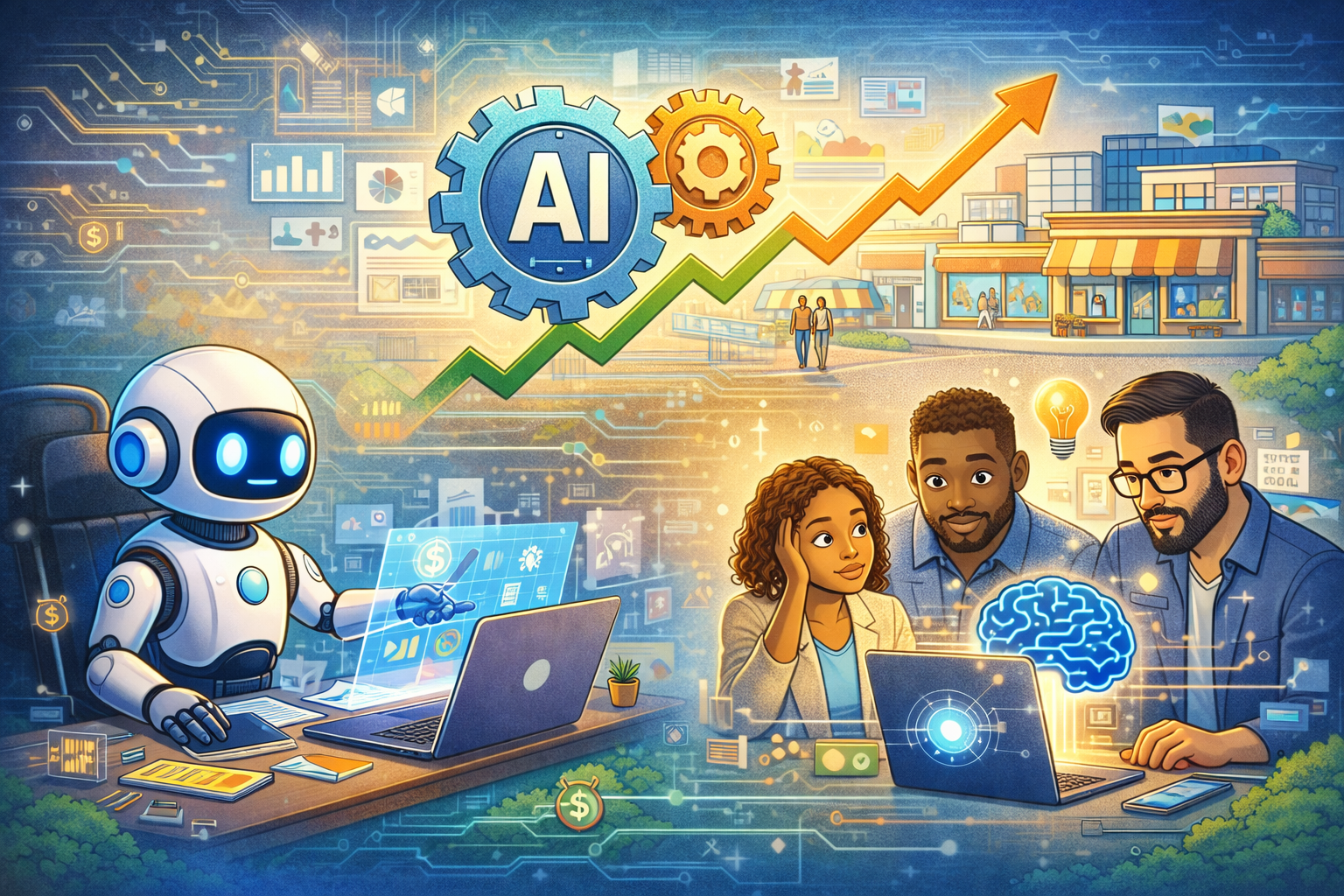
How Artificial Intelligence Is Reshaping Entrepreneurship
Philadelphia,Pa – Artificial Intelligence (AI) is quickly becoming one of the most important tools shaping the future of business. Once seen as technology reserved for large corporations, AI is now increasingly accessible to small businesses and entrepreneurs. From automating routine tasks to improving customer engagement, AI is changing how businesses operate, compete, and grow.
For many small businesses, this shift presents both an opportunity and a challenge.
AI Is Becoming a Competitive Advantage
Small businesses often operate with limited staff and resources. AI tools can help level the playing field by automating time-consuming tasks such as scheduling, customer service responses, data analysis, and marketing.
Recent surveys show that over 90% of small businesses using AI report improvements in productivity, allowing owners to focus more on strategic growth rather than administrative work. AI-driven tools can help businesses analyze customer trends, forecast demand, and create more targeted marketing campaigns. These capabilities were once only available to larger companies with dedicated analytics teams.
In practice, this means entrepreneurs can operate more efficiently while reducing operational costs.
The Productivity Impact
AI is already transforming how businesses manage daily operations. Customer service chat systems, automated bookkeeping platforms, and intelligent marketing tools allow businesses to respond to customer needs faster and more consistently.
Research from McKinsey & Company suggests that AI technologies could contribute up to $4.4 trillion annually to the global economy by increasing productivity and accelerating innovation. For small businesses, even modest productivity improvements can have a significant impact on profitability and growth.
By reducing administrative workloads, AI allows business owners to spend more time on innovation, product development, and community engagement.
The Digital Divide Challenge
While AI offers powerful benefits, access to these technologies is not evenly distributed. Many entrepreneurs—especially those in underserved communities—lack the technical training or resources needed to implement AI tools effectively.
According to research from the U.S. Chamber of Commerce, small businesses that adopt digital technologies grow revenue nearly two times faster than those that do not. However, many small businesses still struggle to adopt new technologies due to cost, lack of training, or uncertainty about how to use them.
This creates a new form of inequality sometimes referred to as the digital divide, where businesses with access to technology accelerate ahead while others fall further behind.
Preparing Entrepreneurs for the AI Economy
As technology continues to evolve, preparing entrepreneurs to use AI responsibly and effectively will become increasingly important. Training programs, mentorship, and technology education can help small business owners understand how to integrate AI tools into their operations.
Economic development initiatives that focus on entrepreneurship support and workforce readiness can play a critical role in helping communities adapt to these technological shifts. When entrepreneurs gain access to both the tools and the knowledge needed to use AI effectively, they can strengthen their businesses and contribute more broadly to local economic growth.
A New Era for Small Business
Artificial Intelligence is not simply another technology trend. It represents a fundamental shift in how businesses operate and compete in the modern economy.
For small businesses willing to learn and adapt, AI offers an opportunity to increase productivity, reach new markets, and build stronger relationships with customers. For communities and economic development organizations, the challenge is ensuring that entrepreneurs are equipped with the knowledge and resources needed to participate in this new economy.
The future of small business will not only depend on innovation—but also on access, education, and the systems that help entrepreneurs thrive.
Sources
McKinsey & Company. The Economic Potential of Generative AI.
https://www.mckinsey.com
U.S. Chamber of Commerce. Small Business Digital Transformation Report.
https://www.uschamber.com
Goldman Sachs. AI and Small Business Productivity Survey.
https://www.goldmansachs.com
SCORE Association. Small Business Technology Trends Report.
https://www.score.org
