Economic Ripple Effects: How Global Energy Disruptions Are Impacting Small Businesses and Underserved Communities
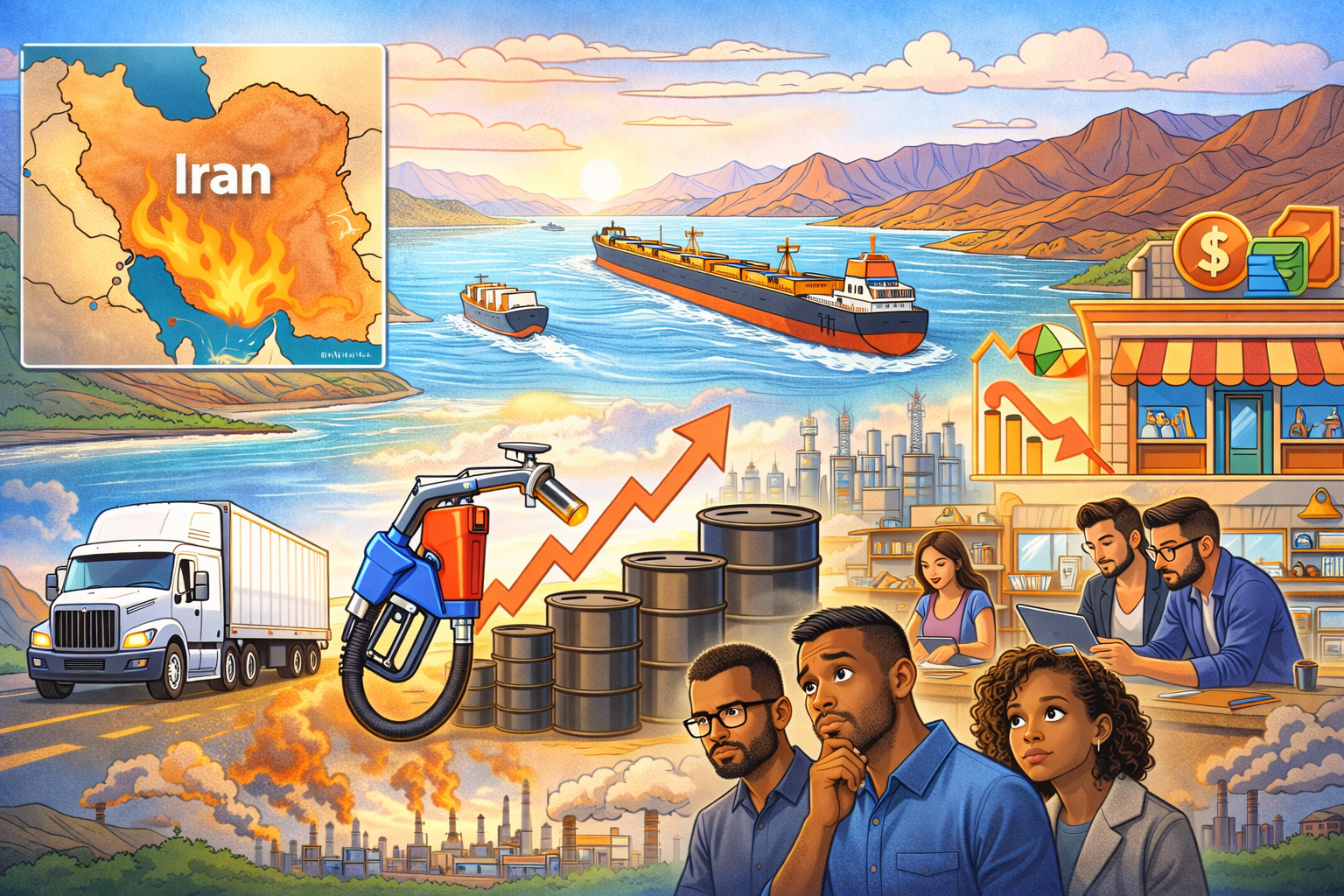
Philadelphia, PA – Economic shocks rarely begin where their effects are ultimately felt. In today’s global economy, events occurring thousands of miles away can quickly influence local markets, operating costs, and the stability of small businesses. Recent geopolitical tensions involving Iran have triggered disruptions in global energy markets, and the aftereffects are now being felt by businesses and communities across the United States.
The Global Trigger
One of the most critical chokepoints in global energy supply is the Strait of Hormuz, a narrow waterway located between Iran and Oman. This route is responsible for transporting approximately 20% of the world’s petroleum liquids, making it one of the most strategically important energy corridors on the planet.
When geopolitical tensions rise in this region, global oil markets react quickly. Even the threat of disruption can push energy prices upward as traders anticipate supply shortages. Because energy markets operate globally, price shifts triggered overseas quickly ripple through transportation networks, manufacturing costs, and ultimately consumer prices.
For the United States, the direct conflict may be distant, but the economic consequences travel through the interconnected systems that power the modern economy.
The Energy Price Ripple Effect
Fuel prices are one of the most immediate indicators of global energy disruption. When oil prices increase internationally, gasoline and diesel prices typically follow.
Diesel fuel is particularly important because it powers the logistics backbone of the economy. Trucks transport roughly 72% of all freight in the United States, meaning higher diesel costs directly increase the cost of shipping goods across the country. When transportation costs rise, those increases eventually appear in the prices consumers pay for food, materials, and everyday products.
For large corporations, rising fuel costs can sometimes be absorbed through scale or long-term supply contracts. Small businesses, however, often operate on much thinner margins.
Why Small Businesses Feel It First
Small businesses are typically the most sensitive to economic shocks. According to surveys conducted by the National Federation of Independent Business (NFIB), inflation and rising operating costs remain among the top concerns for small business owners nationwide.
When operating costs rise—whether through fuel prices, supply chain expenses, or transportation costs—business owners are forced to make difficult decisions. They may raise prices, reduce staff hours, delay hiring, or postpone expansion plans.
These decisions have broader implications for the local economy. Small businesses play a central role in job creation and neighborhood stability. When they struggle, the effects extend beyond the business itself and into the communities they serve.
The Disproportionate Impact on Underserved Communities
Economic disruptions often hit underserved communities hardest. Many entrepreneurs in these communities face limited access to capital, fewer financial reserves, and smaller safety margins when economic conditions shift.
Without strong support systems—such as mentorship networks, funding pathways, and technical assistance—economic shocks can stall progress that entrepreneurs have spent years building.
This is where structured economic support initiatives become critical.
Building Economic Infrastructure
Programs focused on economic empowerment aim to strengthen the systems that support entrepreneurs and workers during periods of uncertainty. Initiatives like Nour Navi focus on creating pathways that help small businesses adapt and grow, even during economic disruption.
Through mentorship, grant readiness support, workforce development pathways, and community collaboration, the initiative works to ensure that entrepreneurs are not navigating economic volatility alone.
Economic empowerment does not happen by chance. It requires coordinated support systems, strong partnerships, and long-term investment in people and communities.
When entrepreneurs succeed, communities grow stronger.
When businesses expand, jobs are created.
When opportunities increase, economic mobility becomes possible.
The economic pressures affecting small businesses today may have originated overseas, but the response must happen locally—through stronger systems, stronger partnerships, and stronger communities.
Philadelphia is just the beginning.
Sources
U.S. Energy Information Administration (EIA). World Oil Transit Chokepoints: Strait of Hormuz.
https://www.eia.gov/international/analysis/special-topics/World_Oil_Transit_Chokepoints
American Trucking Associations. Trucking Moves America Forward – Freight Transportation Statistics.
https://www.trucking.org/economics-and-industry-data
National Federation of Independent Business (NFIB). Small Business Economic Trends Survey.
https://www.nfib.com/surveys/small-business-economic-trends/
Federal Reserve Bank Research. Oil Price Shocks and Inflation Dynamics.
https://www.federalreserve.gov/econres
U.S. Bureau of Labor Statistics. Producer Price Index and Transportation Costs.
https://www.bls.gov/ppi/
